Configuring reward types
 |
 |
 |
 |
Prerequisite
- Access to the Configuration > Reward type (GM006) menu.
Introduction
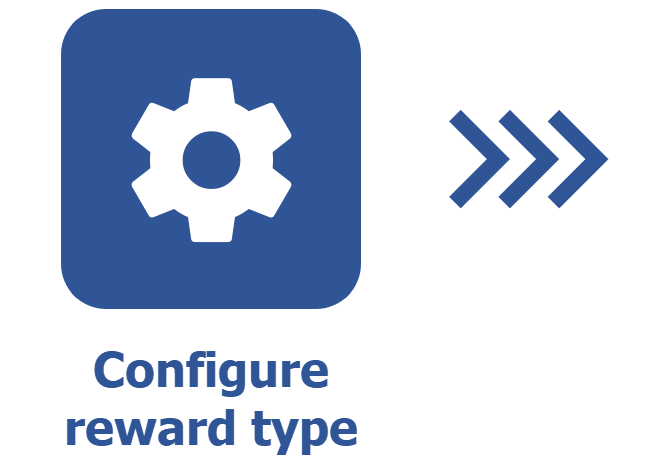
To add rewards in SoftExpert Gamification, reward types must be created.
They classify created rewards. See how to configure them below:
Configuring a reward type
1. Access the Configuration > Reward type (GM006) menu.
2. Click on the  button to add a new type.
3. On the screen that will open, enter an ID # and a name.
4. If you wish, fill in the Upper level type field in the General tab. This field allows for defining a hierarchy for reward types.
5. Then, click on  to enable more tabs.
6. In the Type security tab, click on the side toolbar button to add a permission profile to the type.
7. In the Reward security tab, using the button, define a permission profile for the rewards of this type.
To learn how to add permission profiles, access the Associating a permission profile with the security article.
In SoftExpert Gamification, reward security lists are inherited from the reward type. For this reason, it is not possible to disable the Inherit reward type security list (default) option in the Reward security tab.
8. Click on  to finish the creation.

Conclusion
The reward type has been recorded. Now, it will be possible to create rewards that will be redeemed by the user.